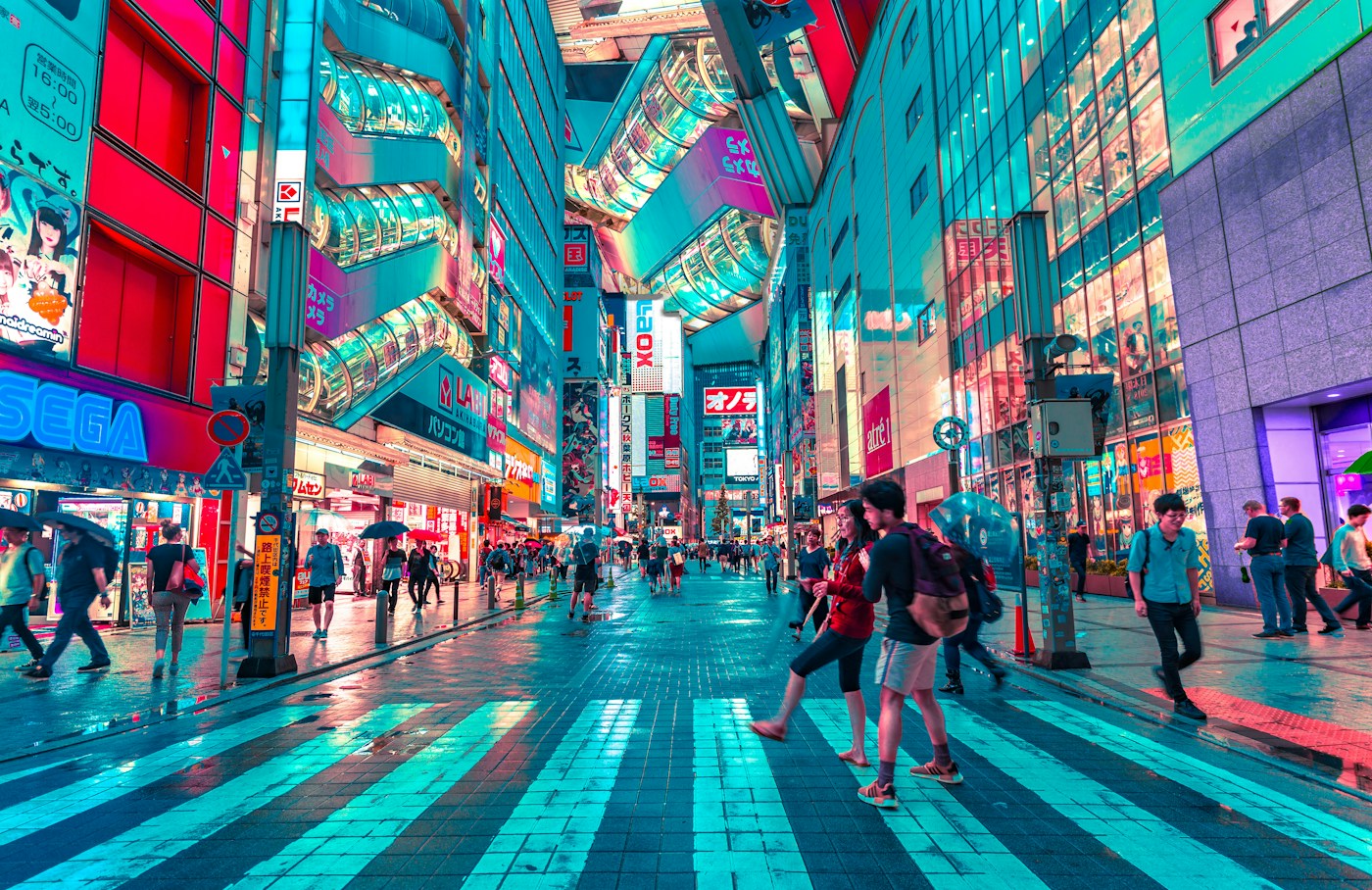
Thirteen million people, a transit system that runs on the second, and a city culture that has perfected the art of doing one thing extraordinarily well. How to visit Tokyo and actually understand what you're seeing.
November 5, 2024
On my third visit to Tokyo, I finally understood the konbini.
The convenience store — Family Mart, 7-Eleven, Lawson — is not a convenience store in the sense that any other country uses the term. It is a neighborhood institution, a social contract, a demonstration of what's possible when a culture takes something mundane and refuses to accept that mundane is acceptable.
The onigiri are better than sandwiches available in most good cafes anywhere else. The coffee is made by a machine that grinds the beans and doses the water to a precision that produces something genuinely good. The staff move with practiced efficiency, never hurried, never rattled. The floor is swept hourly.
This is Tokyo's core character: the belief that whatever you are doing is worth doing correctly, and that correctness requires continuous attention. Apply this principle to ramen, to garden design, to train scheduling, to the folding of department store gift wrap, and you begin to understand why the city produces the particular kind of wonder it does.
The Neighborhoods That Matter
Yanaka: The neighborhood that survived the earthquake, the firebombing, and the development boom. Old wooden shopfronts, a cemetery that functions as a park, a shotengai (covered shopping street) that operates at the pace of 1970. Yanaka Ginza has the best taiyaki (fish-shaped cake filled with red bean paste) in the city. Come on a weekday morning.
Shimokitazawa: Tokyo's creative district. Record shops, vintage clothing, independent theaters, izakayas serving natural wine. The streets are too narrow for through traffic, which creates pockets of urban calm that feel like stolen space.
Tsukiji Outer Market: The inner market moved to Toyosu in 2018. The outer market stayed, and it remains the best place in the city to eat breakfast. The tuna hand rolls at 8 a.m., standing at a counter while the morning traffic builds around you, constitute one of the great meals.
Koenji: The city's bohemian west — vintage shops, live music venues, independent coffee, and a demographic that skews young and interesting. Weekend flea markets in the shrine grounds.
Yanesen triangle (Yanaka, Nezu, Sendagi): The old city that time and bombing spared. Walk the backstreets without direction. The small temples are everywhere and almost entirely unvisited by tourists.
The Food Logic
Tokyo has more Michelin stars than any city on earth. This is partly a reflection of the extraordinary concentration of skilled cooking here, and partly a reflection of how the Michelin inspectors approached the city when it entered the guide. It is also completely irrelevant to how most people should eat here.
The best meals I've had in Tokyo have cost between 800 and 2,000 yen (approximately $5–$14). The ramen at Fuunji in Shinjuku requires arriving before 11:30 a.m. to get a seat. The tonkatsu at Maisen in Omotesando is worth the queue. The yakitori at any of a hundred counters in Memory Lane (Omoide Yokocho) near Shinjuku station at 9 p.m. on a Thursday, smoke and noise and salarymen shoulder to shoulder, is an experience that no amount of restaurant booking can replicate.
Navigating the Transit System
The Tokyo metro is the most reliable transit system in the world. It is also, initially, bewildering.
Start with Google Maps. Set it to transit and it will give you accurate directions including platform numbers, transfer walk times, and to-the-minute arrival estimates. These estimates are correct. The trains arrive when they say they will.
Buy a Suica card at any JR station. This is a rechargeable IC card that works on every train, subway, and bus in the city, and also functions as payment in most convenience stores. It will save you minutes every time you enter or exit a station.
The Yamanote Line (circular, green) connects all major hubs. Shinjuku, Shibuya, Harajuku, Osaki, Tokyo, Ueno, Ikebukuro. If you're lost, find the Yamanote Line and reorient.
On the Weather
Tokyo has four distinct seasons and strong opinions about each. March and April: cherry blossom (and crowds). June: rainy season. August: hot and humid beyond comfort. October and November: autumn color, cool, often the best month. December through February: cold but clear, the city at its crispest.
Come in November if you can arrange it. The ginkgo trees turn yellow and the city doesn't feel overwhelming.
Tokyo rewards visitors who accept that they will never fully understand it and find this fascinating rather than frustrating. The city is not designed for casual legibility. It rewards return visits, unhurried walking, and the willingness to be interested in things you didn't know you'd find interesting.
Bring good shoes. You will walk between twelve and twenty kilometers a day without planning to.